




Stainless steel float balls play a critical role in level control across a wide range of industrial systems. From steam and condensate handling to chemical processing and fluid storage, the right float ball ensures reliable operation, accurate response, and long-term durability.
This guide breaks down how a stainless steel float ball is designed, how it performs under real-world conditions, and what buyers should evaluate when sourcing float balls for industrial applications.
What Is a Stainless Steel Float Ball?
A stainless steel float ball is a hollow, sealed metal sphere engineered to float on liquids and actuate a mechanical response—such as opening or closing a valve—based on fluid level. These components are commonly used in steam traps, level control devices, separators, tanks, and other process equipment.
Compared to plastic or brass alternatives, stainless steel float balls offer superior resistance to corrosion, pressure, and temperature extremes, making them ideal for demanding industrial environments.
Key Design Factors That Impact Performance
Understanding float ball construction is essential when selecting the right component for your system.
Material Grade
Most industrial float balls are manufactured from stainless steel grades such as 304 or 316. Grade selection depends on the media being handled, operating temperatures, and corrosion exposure. For aggressive chemicals or marine environments, higher corrosion resistance is often required.
Wall Thickness
Wall thickness directly affects buoyancy, pressure tolerance, and lifespan. Thicker walls increase durability and resistance to deformation, while thinner walls allow for faster response in low-density fluids. Selecting the correct balance is critical to reliable performance.
Diameter and Weight
Float ball size determines displacement and sensitivity. Larger diameters provide more lift, while smaller float balls enable precision control in compact assemblies. Weight must be carefully matched to the application to ensure proper actuation.
Weld Integrity
Precision welding and leak-free seams are essential. Poor welds can lead to fluid ingress, loss of buoyancy, and system failure—especially in steam or high-pressure environments.
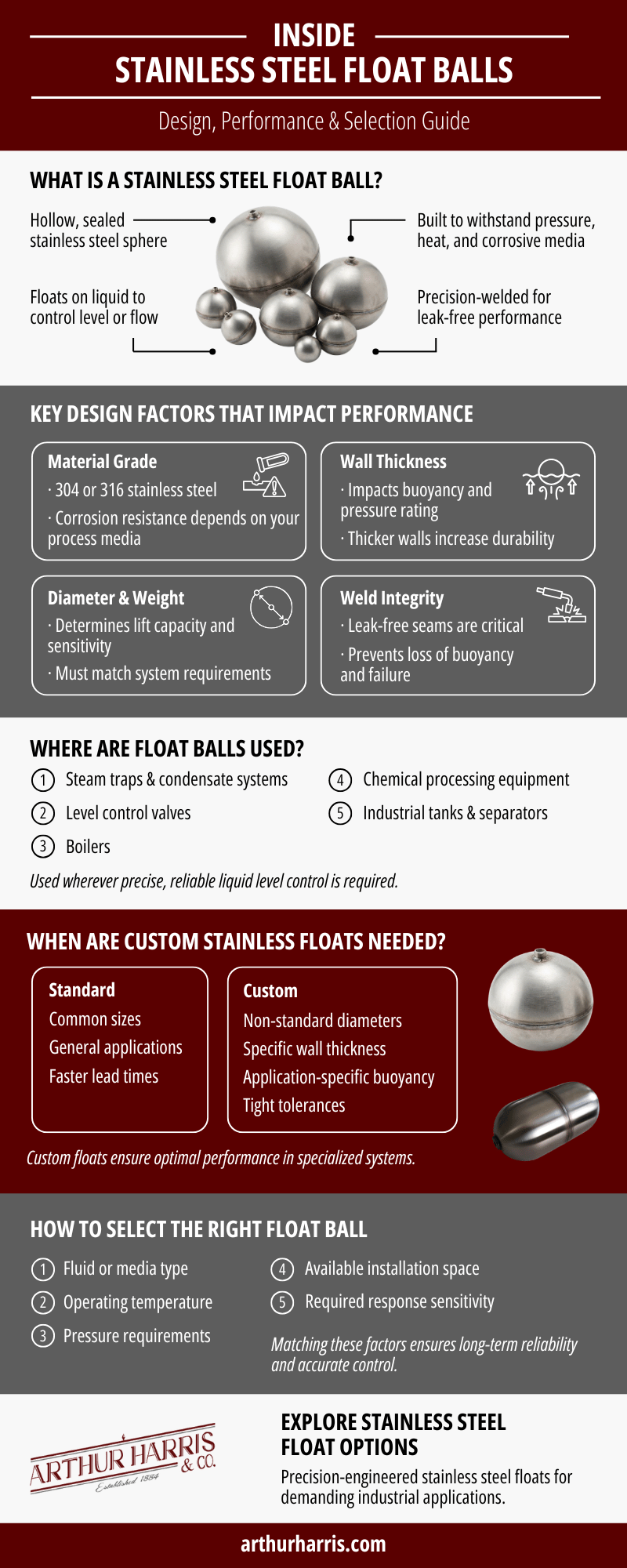
Common Stainless Float Ball Applications
Stainless steel float balls are used across many industries due to their versatility and durability. Typical stainless float ball applications include:
- Steam traps and condensate return systems
- Liquid level control valves
- Boiler feedwater systems
- Chemical processing equipment
- Oil and gas separators
- Food and beverage processing systems
These industrial float balls are designed to operate consistently in harsh conditions where reliability is non-negotiable.
Why Custom Stainless Floats Matter
Off-the-shelf float balls may not always meet the demands of specialized equipment. In these cases, custom stainless floats offer significant advantages.
Customization can include:
- Non-standard diameters or wall thicknesses
- Specific material grades
- Tight tolerance requirements
- Application-specific buoyancy tuning
Working with an experienced stainless steel float ball manufacturer enables buyers to precisely match float ball performance to system requirements—reducing downtime and extending service life.
How to Choose the Right Stainless Steel Float Ball
When evaluating options, a strong float ball buying guide approach includes asking the following questions:
- What fluid or media will the float ball contact?
- What are the operating temperature and pressure ranges?
- How critical is response time and accuracy?
- Are there space or weight constraints within the assembly?
- Is a custom solution required for optimal performance?
Answering these questions early helps ensure proper selection and long-term reliability.
Trusted Manufacturing for Industrial Applications
At Arthur Harris, stainless steel float balls are engineered with precision manufacturing, strict quality control, and application-driven design. Their floats are built to meet the performance demands of industrial systems where failure is not an option. Contact Arthur Harris to discuss your specific application needs.
Frequently Asked Questions About Stainless Steel Float Balls
What makes stainless steel float balls better than plastic or brass?
Stainless steel float balls offer superior strength, corrosion resistance, and temperature tolerance, making them better suited for industrial and high-pressure applications.
How long do stainless steel float balls last?
When properly selected and manufactured, stainless steel float balls can last for many years, even in harsh operating environments.
Can stainless steel float balls be customized?
Yes. Many applications require custom diameters, wall thicknesses, or materials. Custom stainless floats ensure optimal buoyancy and performance.
What industries commonly use industrial float balls?
Industries such as oil and gas, chemical processing, power generation, food and beverage, and HVAC commonly rely on industrial float balls.
How do I know which float ball size I need?
Float ball sizing depends on fluid density, required buoyancy, system pressure, and mechanical design. Consulting with an experienced manufacturer helps ensure correct selection.